

The Great Wall of China stands as a monumental testament to human ingenuity and perseverance, stretching over 13,000 miles across northern China. Originally constructed to protect against invasions from nomadic tribes, the wall has evolved into a symbol of national pride and cultural heritage. Its construction began as early as the 7th century BC, with various dynasties contributing to its expansion and fortification.
The most well-known sections, built during the Ming Dynasty (1368-1644), showcase impressive engineering techniques, including watchtowers, barracks, and garrison stations that were strategically placed to enhance defense capabilities.
Badaling is the most popular section, attracting millions of tourists each year due to its accessibility and well-preserved state.
In contrast, Mutianyu offers a more tranquil experience, with fewer crowds and stunning views of the surrounding mountains. Walking along the wall, one can appreciate not only the breathtaking vistas but also the historical significance embedded in its stones. Each brick tells a story of the laborers who toiled under harsh conditions, often sacrificing their lives for the construction of this colossal structure.
The Great Wall is not merely a physical barrier; it embodies the spirit of resilience and unity that has characterized Chinese civilization for centuries.
Key Takeaways
- The Great Wall stands as an enduring symbol of China’s historical strength and architectural ingenuity.
- The Terracotta Army offers a unique glimpse into ancient Chinese funerary art and military history.
- The Forbidden City reveals the grandeur and complexity of China’s imperial heritage.
- The Yangtze River provides breathtaking scenic cruises showcasing diverse landscapes and cultural sites.
- The Pandas of Chengdu highlight China’s commitment to wildlife conservation and its national treasure.
The Terracotta Army: A Fascinating Historical Site
Discovered in 1974 by local farmers in Xi’an, the Terracotta Army is one of the most significant archaeological finds of the 20th century. This vast collection of life-sized clay soldiers was created to accompany Qin Shi Huang, the first Emperor of China, in the afterlife. The army consists of over 8,000 soldiers, 670 horses, and 130 chariots, each meticulously crafted with unique facial features and expressions.
The sheer scale and detail of this underground army reflect the emperor’s desire for protection in the afterlife and his belief in the continuation of power beyond death. The site itself is divided into three main pits, with Pit 1 being the largest and most impressive. Visitors can walk through the expansive excavation site, marveling at rows upon rows of soldiers standing in formation, ready for battle even in death.
The craftsmanship is astounding; artisans used different molds for various body parts and then assembled them to create individual figures. The colors that once adorned these figures have faded over time due to exposure to air and light, but conservation efforts are ongoing to preserve what remains. The Terracotta Army not only provides insight into ancient Chinese military practices but also offers a glimpse into the cultural beliefs surrounding death and the afterlife during the Qin Dynasty.
The Forbidden City: Exploring China’s Imperial Past
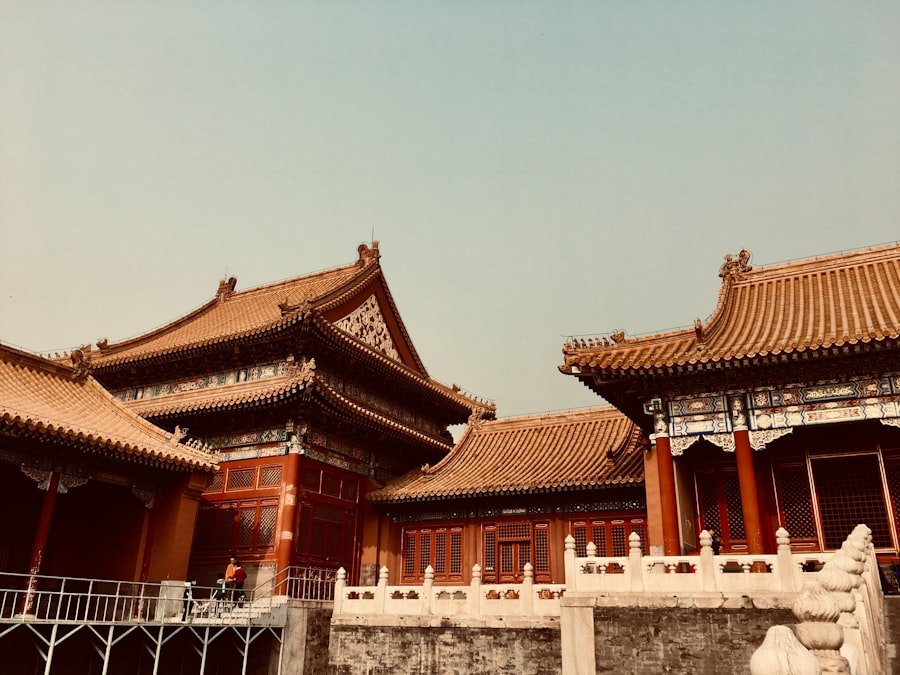
The Forbidden City, located in the heart of Beijing, served as the imperial palace for 24 emperors during the Ming and Qing Dynasties. Spanning approximately 180 acres, this UNESCO World Heritage Site is a stunning example of traditional Chinese architecture, characterized by its grand halls, intricate roofs, and vibrant colors. The name “Forbidden City” reflects its historical significance; access was restricted to the emperor’s family and select officials, making it a place shrouded in mystery and power.
As visitors enter through the Meridian Gate, they are greeted by a vast courtyard that leads to the Hall of Supreme Harmony, where emperors once held important ceremonies. The layout of the Forbidden City is meticulously planned according to traditional Chinese cosmology, with structures arranged along a north-south axis symbolizing harmony between heaven and earth. Each building within the complex serves a specific purpose, from administrative functions to ceremonial events.
The intricate details found in the carvings and decorations tell stories of imperial life, showcasing everything from dragon motifs representing imperial authority to phoenixes symbolizing empresses. Exploring the Forbidden City is akin to stepping back in time, allowing visitors to immerse themselves in China’s rich imperial history.
The Yangtze River: Cruising through China’s Scenic Landscapes
| Metric | Details |
|---|---|
| Length of Yangtze River | 6,300 kilometers (3,917 miles) |
| Number of Cruise Ports | 10 major ports including Chongqing, Yichang, Wuhan |
| Popular Cruise Duration | 3 to 7 days |
| Key Scenic Areas | Three Gorges, Shennong Stream, Fengdu Ghost City |
| Average Cruise Speed | 15-20 km/h |
| Annual Tourist Visits | Over 1 million passengers |
| Best Season to Cruise | Spring (April to June) and Autumn (September to November) |
| Major Wildlife Sightings | Chinese river dolphins (rare), migratory birds, fish species |
The Yangtze River, known as Chang Jiang in Chinese, is the longest river in Asia and the third longest in the world. Flowing over 3,900 miles from Tibet to Shanghai, it traverses diverse landscapes that range from snow-capped mountains to lush valleys and bustling cities. A cruise along this majestic river offers travelers an unparalleled opportunity to witness China’s natural beauty and cultural heritage firsthand.
One of the highlights of a Yangtze River cruise is the Three Gorges region, renowned for its dramatic cliffs and serene waters. The Three Gorges Dam, an engineering marvel completed in 2012, not only generates hydroelectric power but also serves as a vital flood control system. As cruise ships glide through this breathtaking area, passengers can marvel at ancient villages perched on cliffsides and explore historical sites such as Fengjie and Wushan.
The river’s banks are dotted with terraced fields and traditional fishing boats, providing a glimpse into rural life along this vital waterway. Additionally, cultural performances on board often showcase traditional music and dance, enriching the experience with insights into local customs and traditions.
The Pandas of Chengdu: A Delightful Encounter with China’s National Treasure
Chengdu, the capital of Sichuan Province, is home to one of China’s most beloved symbols: the giant panda. These adorable creatures are not only a national treasure but also an endangered species that has captured hearts worldwide. The Chengdu Research Base of Giant Panda Breeding offers visitors an opportunity to observe these gentle giants in a naturalistic setting while learning about conservation efforts aimed at protecting their dwindling population.
At the research base, visitors can witness pandas at various stages of life—from playful cubs tumbling around their enclosures to adult pandas munching on bamboo with an endearing nonchalance. The facility emphasizes education and conservation; informative displays explain the challenges pandas face in their natural habitat due to habitat loss and climate change. Engaging with knowledgeable staff members provides deeper insights into panda behavior and breeding programs designed to increase their numbers in captivity and eventually reintroduce them into the wild.
For many visitors, spending time with these charming animals is a highlight of their trip to China, fostering a greater appreciation for wildlife conservation.
The Silk Road: Tracing Ancient Trade Routes and Cultural Exchanges
The Silk Road was not merely a single route but rather a network of trade paths that connected East Asia with Europe and beyond for centuries. Established during the Han Dynasty (206 BC – 220 AD), it facilitated not only the exchange of silk but also spices, precious metals, art, and ideas between diverse cultures. This ancient trade route played a pivotal role in shaping civilizations by promoting cultural exchanges that influenced art, religion, and technology across continents.
Traveling along sections of the Silk Road today allows modern explorers to trace history through bustling markets and ancient caravanserais that once provided rest for weary travelers. Cities like Samarkand and Bukhara in Uzbekistan are rich with architectural wonders that reflect their historical significance as trading hubs.
Additionally, artifacts discovered along these routes reveal how goods were traded and how ideas spread—Buddhism traveled from India to China along these paths while Persian carpets influenced Chinese textile designs. Exploring the Silk Road is akin to walking through history itself, where every stop unveils layers of human connection across time.
The Li River: Immersing in the Picturesque Beauty of Guilin
The Li River is renowned for its breathtaking karst landscape that has inspired poets and artists for centuries. Flowing through Guilin in southern China, this river is famous for its dramatic limestone peaks that rise abruptly from lush greenery along its banks. A cruise along the Li River offers an unforgettable experience as travelers are treated to stunning vistas that change with every bend in the waterway.
As boats glide through this picturesque region, passengers can admire iconic formations such as Elephant Trunk Hill and Seven Star Park. The reflections of these towering peaks on the river’s surface create a mesmerizing tableau that seems almost otherworldly. Local fishermen often use traditional cormorant fishing techniques that date back centuries; watching these skilled birds dive into the water to catch fish adds an authentic touch to the experience.
Additionally, small villages dotting the riverbanks provide opportunities for cultural immersion—visitors can interact with local residents who maintain traditional lifestyles rooted in agriculture and craftsmanship. The Li River is not just a scenic wonder; it embodies the harmonious relationship between nature and human life.
The Potala Palace: Discovering the Spiritual Heart of Tibet
Perched high on a hilltop overlooking Lhasa, the Potala Palace is an architectural marvel that serves as a symbol of Tibetan Buddhism and culture. Originally built in the 7th century by King Songtsen Gampo, it was expanded into its current form during the 17th century under the Fifth Dalai Lama. This UNESCO World Heritage Site is not only an impressive feat of engineering but also a spiritual center that has played a crucial role in Tibetan history.
Visitors to Potala Palace are often struck by its grandeur; with over 1,000 rooms spread across thirteen stories, it houses numerous chapels adorned with intricate murals and statues depicting Buddhist deities. The Red Palace serves as a mausoleum for past Dalai Lamas and contains their stupas made from gold and precious stones—a testament to their revered status within Tibetan society. As one ascends through its halls, they encounter sacred relics that tell stories of devotion and enlightenment while gaining insight into Tibetan Buddhist practices.
The panoramic views from its terraces offer breathtaking vistas of Lhasa against a backdrop of snow-capped mountains—a reminder of both nature’s beauty and spiritual significance in Tibetan culture. Exploring these remarkable sites across China reveals not only their historical importance but also their enduring impact on contemporary society. Each destination offers unique insights into China’s rich tapestry of culture, history, and natural beauty—an invitation for travelers to delve deeper into this fascinating land.
If you’re planning a trip to China, you might also be interested in exploring some of the world’s most remarkable architectural feats. A great resource for this is the article on the 50 greatest man-made wonders, which highlights incredible structures that showcase human ingenuity. You can read more about these wonders and get inspired for your travels by visiting this article.
FAQs
What are the popular destinations included in China tours?
Popular destinations in China tours often include Beijing, Shanghai, Xi’an, Guilin, Chengdu, and the Great Wall of China. Other notable places are the Terracotta Warriors, the Forbidden City, the Li River, and the pandas in Chengdu.
When is the best time to go on a China tour?
The best time to visit China is during spring (April to May) and autumn (September to October) when the weather is mild and comfortable. These seasons also avoid the peak tourist crowds and extreme temperatures.
Do I need a visa to travel to China?
Yes, most travelers require a visa to enter China. It is important to apply for a Chinese tourist visa (L visa) in advance through a Chinese embassy or consulate in your country.
What languages are commonly spoken during China tours?
Mandarin Chinese is the official language of China. In major tourist areas, English is often spoken by guides and hotel staff, but learning some basic Mandarin phrases can be helpful.
Are guided tours recommended for traveling in China?
Guided tours are highly recommended for first-time visitors to China as they provide expert knowledge, ease of transportation, and help navigate language barriers. They also ensure visits to key cultural and historical sites.
What should I pack for a China tour?
Packing essentials include comfortable walking shoes, weather-appropriate clothing, a universal power adapter, travel documents, and any necessary medications. It is also advisable to bring a copy of your passport and visa.
Is it safe to travel in China?
China is generally considered a safe destination for tourists. Standard travel precautions such as safeguarding personal belongings and being aware of local laws and customs are recommended.
What currency is used in China and can I use credit cards?
The official currency is the Chinese Yuan (CNY or RMB). Credit cards are accepted in many hotels, restaurants, and shops in major cities, but cash is preferred in smaller towns and markets.
Are there any cultural customs I should be aware of during a China tour?
Yes, it is respectful to follow local customs such as greeting with a slight bow, using both hands when giving or receiving items, and avoiding sensitive political topics. It is also polite to remove shoes when entering someone’s home.
Can I use my mobile phone and internet freely in China?
Mobile phones work in China, but some international websites and apps may be restricted due to internet censorship. Many travelers use VPN services to access blocked sites, but it is important to check current regulations before traveling.