
Uzbekistan, a landlocked country in Central Asia, is a treasure trove of cultural heritage, shaped by its historical significance along the Silk Road. This ancient trade route not only facilitated the exchange of goods but also fostered a rich tapestry of cultural interactions among diverse civilizations. The result is a unique blend of traditions, languages, and customs that reflect the influences of Persian, Turkic, Russian, and Islamic cultures.
The vibrant culture of Uzbekistan is evident in its art, music, dance, and festivals, all of which contribute to the country’s identity and allure. The cultural landscape of Uzbekistan is characterized by its deep-rooted traditions and a strong sense of community. Family ties are paramount, and social gatherings often revolve around shared meals and celebrations.
The warmth and hospitality of the Uzbek people are legendary, making visitors feel welcomed and cherished. This cultural richness is not merely a relic of the past; it continues to evolve, with contemporary artists and musicians drawing inspiration from their heritage while infusing modern elements into their work. As Uzbekistan opens its doors to the world, it invites travelers to explore its multifaceted culture, offering a glimpse into a society that values both its history and its future.
Key Takeaways
- Uzbekistan boasts a rich cultural heritage blending history, art, and traditions.
- The country is home to stunning historical sites and unique architectural wonders.
- Traditional Uzbek cuisine offers diverse and flavorful culinary experiences.
- Music, dance, and vibrant festivals play a central role in cultural expression.
- Handicrafts, textiles, and hospitality reflect the deep-rooted customs and warmth of the people.
Historical and Architectural Marvels
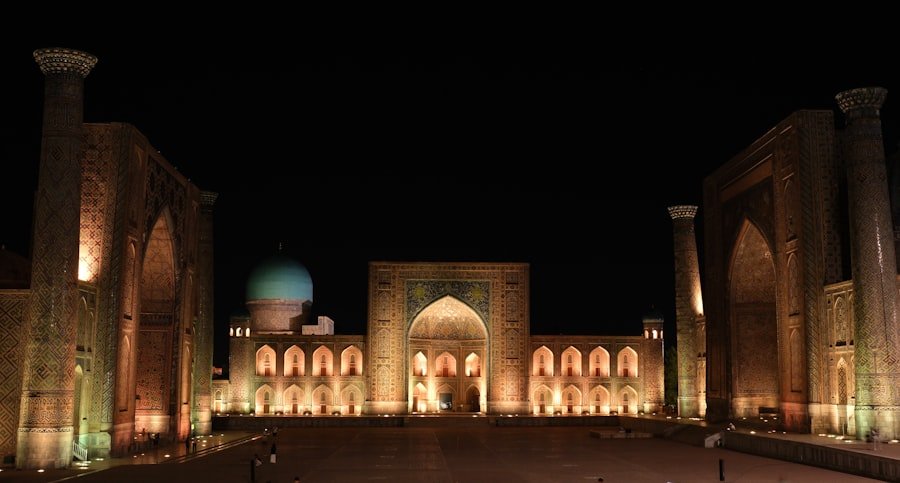
Uzbekistan is home to some of the most stunning architectural wonders in the world, many of which date back to the Timurid Empire in the 14th and 15th centuries. Cities like Samarkand, Bukhara, and Khiva are adorned with magnificent mosques, madrasas, and mausoleums that showcase intricate tile work, grand domes, and soaring minarets. The Registan Square in Samarkand is perhaps the most iconic example, featuring three grand madrasas that exemplify the artistry of Islamic architecture.
The vibrant blue tiles and elaborate geometric patterns tell stories of a bygone era when this city was a center of learning and culture. Bukhara, another jewel of Uzbekistan, boasts over 140 architectural monuments, including the Ark Fortress and the Bolo Haouz Mosque. The Ark Fortress served as the residence of the emirs for centuries and stands as a testament to the city’s historical significance.
The intricate woodwork and stunning mosaics found in these structures reflect the craftsmanship that has been passed down through generations. Khiva’s Itchan Kala, a UNESCO World Heritage site, is a well-preserved example of an ancient city with its mud-brick walls and narrow alleyways. Each of these cities offers a unique glimpse into Uzbekistan’s rich history and architectural prowess, making them essential stops for anyone seeking to understand the cultural heritage of this remarkable nation.
Traditional Cuisine and Culinary Delights
Uzbek cuisine is a delightful reflection of the country’s diverse cultural influences and agricultural bounty. At the heart of Uzbek culinary tradition is plov, a fragrant rice dish typically made with lamb or beef, carrots, onions, and an array of spices. Each region boasts its own variation of plov, with Samarkand’s version often celebrated for its rich flavors and generous portions.
The preparation of plov is considered an art form in Uzbekistan, often cooked in large quantities for family gatherings or special occasions. The communal aspect of sharing this dish underscores the importance of hospitality in Uzbek culture. Beyond plov, Uzbekistan offers a plethora of culinary delights that showcase its agricultural heritage.
Manti, steamed dumplings filled with meat and onions, are another beloved dish that reflects the nomadic roots of the Uzbek people. Additionally, lagman—a hearty noodle soup with vegetables and meat—demonstrates the influence of neighboring cultures. Bread holds a sacred place in Uzbek cuisine; lepyoshka, a round flatbread baked in tandoors, is often served with every meal.
The ritual of breaking bread together symbolizes unity and friendship among families and friends. As visitors explore Uzbekistan’s culinary landscape, they are treated to an array of flavors that tell stories of tradition, community, and the land itself.
Music, Dance, and Festivals
The musical heritage of Uzbekistan is as diverse as its landscape, encompassing various genres that reflect the country’s rich history and cultural influences. Traditional Uzbek music often features instruments such as the dutar (a two-stringed lute), the tanbur (a long-necked lute), and the doira (a frame drum). These instruments are integral to performances that celebrate life events such as weddings or harvest festivals.
The melodies are characterized by intricate rhythms and improvisation, allowing musicians to express their emotions and connect with their audience on a profound level. Dance is another vital aspect of Uzbek culture, with traditional dances often performed during celebrations and festivals. The lively choreography showcases regional styles that vary from one area to another.
For instance, the “Lazgi” dance from Bukhara is known for its energetic movements and rapid footwork, while “Yalla,” a group dance performed by women, emphasizes grace and fluidity. Festivals such as Navruz—celebrating the Persian New Year—are marked by vibrant performances that bring communities together in joyous celebration. These events not only highlight Uzbekistan’s artistic expressions but also serve as a reminder of the importance of cultural continuity in an ever-changing world.
Handicrafts and Textiles
| Metric | Data | Notes |
|---|---|---|
| Annual Visitors | 2.5 million (2023) | Steady growth in tourism sector |
| Top Tourist Cities | Tashkent, Samarkand, Bukhara, Khiva | Known for historical and cultural sites |
| Popular Attractions | Registan Square, Ark Fortress, Shah-i-Zinda | UNESCO World Heritage Sites |
| Average Daily Cost | 40-70 | Includes accommodation, food, and transport |
| Best Travel Season | April to June, September to November | Mild weather and fewer tourists |
| Visa Policy | Visa-free for 30-90 days for many countries | Check specific country requirements |
| Language | Uzbek (official), Russian widely spoken | English less common outside major cities |
| Currency | Uzbekistani Som (UZS) | Cash preferred in many areas |
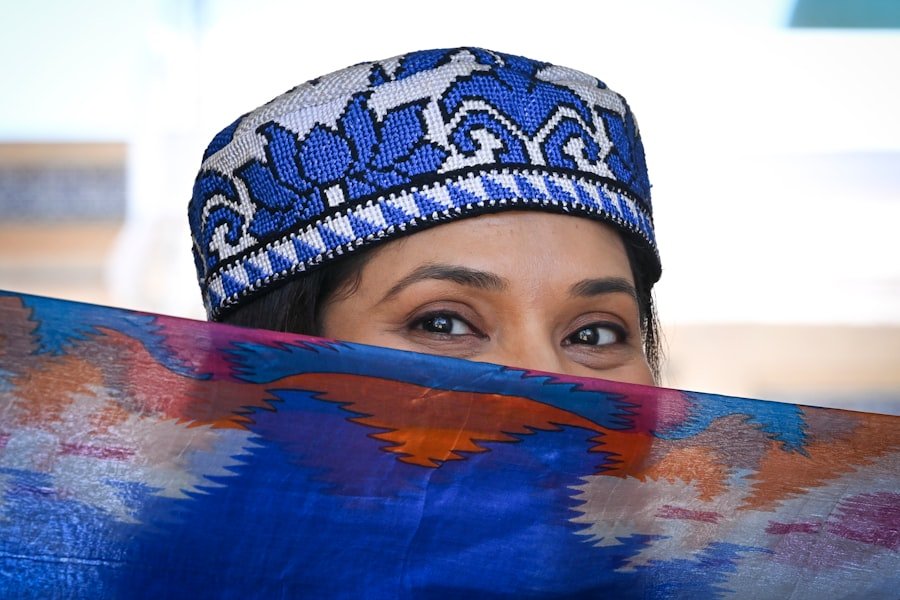
Uzbekistan’s handicrafts are renowned for their exquisite craftsmanship and vibrant colors, reflecting centuries-old traditions passed down through generations. One of the most celebrated forms of art is suzani embroidery—a decorative textile featuring intricate patterns often depicting floral motifs or geometric designs. These textiles are not only used for decorative purposes but also hold cultural significance as they are often gifted during weddings or other important life events.
Artisans meticulously hand-stitch each piece using colorful threads made from natural dyes derived from plants. Ceramics also play a significant role in Uzbekistan’s handicraft scene. The city of Rishtan is famous for its blue-and-white pottery adorned with intricate designs that have become synonymous with Uzbek craftsmanship.
Each piece tells a story through its patterns and colors, often inspired by nature or historical events. Additionally, silk production has deep roots in Uzbekistan; cities like Margilan are known for their ikat fabrics—textiles dyed using a resist-dyeing technique that creates stunning patterns. The process requires immense skill and patience, resulting in fabrics that are not only beautiful but also carry the essence of Uzbek culture.
Religious Diversity and Sacred Sites
Uzbekistan’s religious landscape is marked by a rich tapestry of beliefs that coexist harmoniously within its borders. While Islam is the predominant faith—predominantly Sunni—there are also significant communities practicing other religions such as Christianity and Judaism. This diversity is reflected in the country’s sacred sites, which range from ancient mosques to synagogues that tell stories of coexistence throughout history.
The Bukhara region is home to several important Islamic sites, including the Kalyan Mosque and Mir-i Arab Madrasah, both exemplifying stunning architectural design and spiritual significance. The Kalyan Minaret stands tall as a symbol of Bukhara’s historical importance as a center for Islamic scholarship. In contrast, Tashkent houses the Jewish community’s grand synagogue—one of the largest in Central Asia—demonstrating the rich Jewish heritage that has thrived in Uzbekistan for centuries.
These sacred sites not only serve as places of worship but also as cultural landmarks that embody the spirit of tolerance and respect among different faiths.
Hospitality and Cultural Etiquette
Hospitality is deeply ingrained in Uzbek culture; it is considered both an honor and a duty to welcome guests into one’s home. Visitors can expect to be treated with warmth and generosity, often being offered traditional dishes accompanied by tea—a staple beverage in Uzbek households. The act of sharing food symbolizes friendship and respect; it is customary for hosts to serve their guests first before partaking themselves.
Understanding cultural etiquette is essential for anyone wishing to engage meaningfully with Uzbek society. For instance, it is polite to remove one’s shoes before entering a home or certain sacred sites. When dining, it is customary to eat with one’s right hand while keeping the left hand away from food—a practice rooted in cultural beliefs about cleanliness.
Additionally, addressing elders with respect is paramount; using appropriate titles when speaking to older individuals reflects an understanding of social hierarchies within Uzbek culture. By embracing these customs, visitors can foster genuine connections with locals while gaining deeper insights into Uzbekistan’s rich cultural fabric.
Exploring Uzbekistan’s Natural Beauty
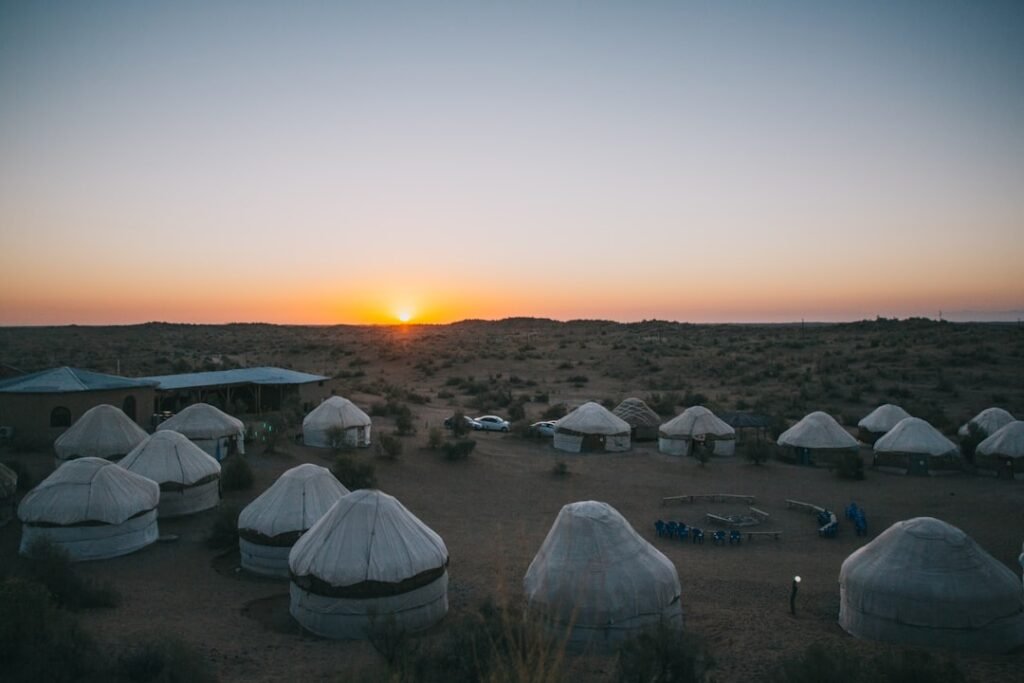
Beyond its historical cities and cultural treasures lies Uzbekistan’s breathtaking natural beauty, characterized by diverse landscapes ranging from vast deserts to majestic mountains. The Kyzylkum Desert stretches across much of central Uzbekistan, offering an otherworldly experience for those willing to venture into its arid expanse. Here, visitors can witness stunning sunsets over rolling sand dunes or explore ancient caravanserais that once served as resting points along trade routes.
The Tien Shan mountain range provides a striking contrast to the desert landscape with its snow-capped peaks and lush valleys. Areas like Chimgan offer opportunities for hiking, skiing, and exploring pristine nature reserves teeming with wildlife. The picturesque lakes such as Charvak Lake serve as popular recreational spots where locals gather for picnics or water sports during warmer months.
Each region showcases unique flora and fauna while providing an escape into nature’s tranquility—a reminder that Uzbekistan’s beauty extends far beyond its urban centers. In conclusion, Uzbekistan stands as a vibrant testament to cultural richness shaped by history, tradition, and natural beauty. From its architectural marvels to culinary delights and warm hospitality, every aspect invites exploration and appreciation for this remarkable nation at the crossroads of civilizations.