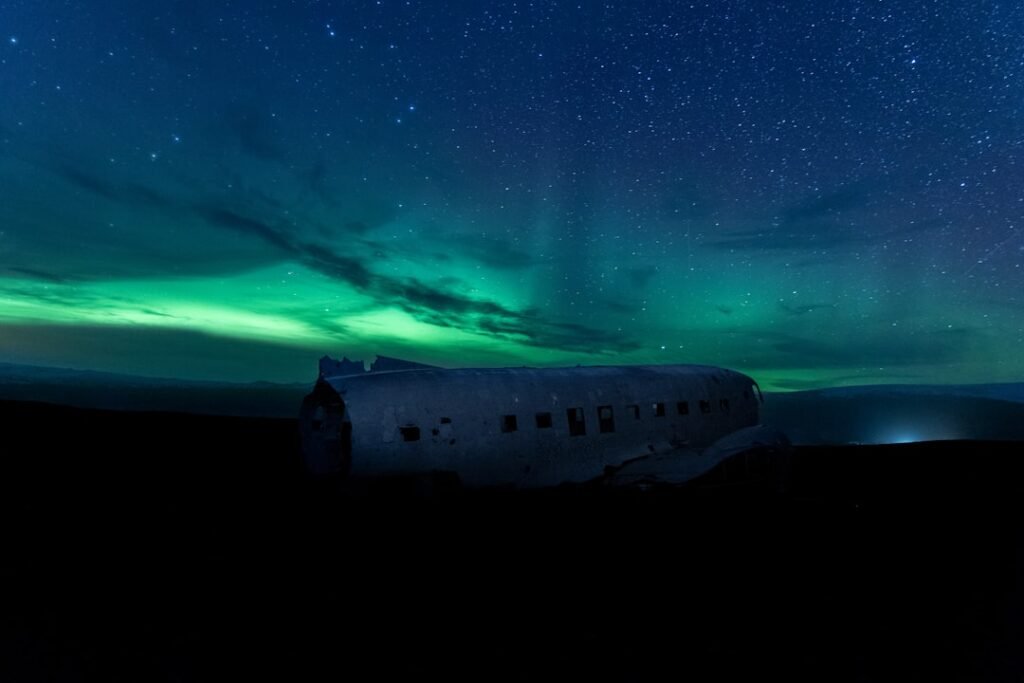

I am often asked, “When is the best time to see the Aurora in Iceland?” It is a question that, while seemingly straightforward, unravels into a fascinating interplay of celestial mechanics, atmospheric conditions, and geographical considerations. My aim here is to provide you with a comprehensive understanding, much like a seasoned cartographer detailing a complex terrain, so you can optimize your chances of witnessing this breathtaking phenomenon.
Before I delve into the specifics of timing, I believe it’s crucial for you to grasp the fundamental science behind the Aurora Borealis. It is not merely a light show but a cosmic ballet orchestrated by the sun and my planet’s magnetic field.
Solar Wind and Earth’s Magnetosphere
I envision the sun constantly expelling a stream of charged particles, a phenomenon I know as the solar wind. This wind, a tempest in space, travels at speeds of several hundred kilometers per second. When these charged particles encounter my planet’s magnetic field, they are largely deflected, forming a protective shield. However, at the poles, this shield is weaker, like a chink in armor.
Particle Collisions and Light Emission
As these solar wind particles penetrate the Earth’s atmosphere at high altitudes (typically between 80 and 500 kilometers), they collide with atmospheric gases, primarily oxygen and nitrogen atoms. I see these collisions as microscopic fireworks. The energy transferred from the solar particles excites the atmospheric atoms, causing their electrons to jump to higher energy levels. When these electrons return to their ground state, they emit photons of light. The specific color of the aurora is determined by the type of gas atom involved and the altitude of the collision. Oxygen, for example, typically produces green and red auroras, while nitrogen often results in blue or purple hues.
The Auroral Oval
I understand that the Aurora Borealis is not a uniformly distributed light across the sky. Instead, it typically appears as an oval-shaped band around the magnetic poles. This “auroral oval” expands and contracts depending on the intensity of solar activity. When solar activity is high, I expect the auroral oval to broaden, making the aurora visible at lower latitudes. Iceland, due to its high latitude, is almost consistently within this oval, a significant advantage for aurora hunters.
If you’re planning a trip to Iceland to witness the breathtaking auroras, it’s essential to know the best times to see this natural phenomenon. For more travel inspiration and tips, you might find this article on the top destinations in Switzerland helpful, as it highlights some of the most beautiful places to visit in Europe. Check it out here: Best Places to Visit in Switzerland.
The Prime Season for Aurora Viewing in Iceland
When considering the best time to see the Aurora in Iceland, I immediately think of the darkest months. My personal experience and scientific data confirm that the winter season, extending into early spring and late autumn, offers the greatest probability. I consider darkness a fundamental ingredient.
Astronomical Darkness: Your Ally
I define astronomical darkness as the period when the sun is more than 18 degrees below the horizon, and there is no residual twilight. This is the deepest kind of darkness, completely free from indirect sunlight, crucial for the fainter aurora displays. In Iceland, this period of astronomical darkness is protracted during the winter months. For instance, in December, I observe that Reykjavik experiences only about 4-5 hours of daylight, leaving ample time for aurora viewing.
September to April: The Golden Window
Based on my observations, I categorize the period from September to April as the “golden window” for aurora viewing in Iceland. During these months, the nights are long, and the probability of encountering clear skies, while not guaranteed, is generally higher than during the summer.
September and October: Autumnal Advantage
I find September and October to be particularly appealing. The weather, while cooler, is often more stable than the depths of winter. Furthermore, the landscapes still retain some of their autumnal colors, offering spectacular photographic opportunities should the aurora grace the sky. The hours of darkness progressively increase throughout these months.
November to February: The Winter Peak
I consider November, December, January, and February to be the peak months. The darkness is at its most profound during this period, turning the Icelandic nights into a vast, unblemished canvas for the aurora. However, I must caution about the weather. These months are also characterized by colder temperatures, increased precipitation (snow and sleet are common), and stronger winds. Preparedness is paramount.
March and April: Spring’s Last Hurrah
As spring approaches in March and April, the days begin to lengthen, gradually reducing the hours of astronomical darkness. Despite this, I have witnessed some magnificent displays during these months. The weather generally starts to improve, offering a potentially more comfortable viewing experience compared to mid-winter. However, I acknowledge that your window of opportunity within a given night will be shorter.
Factors Influencing Aurora Visibility (Beyond Season)
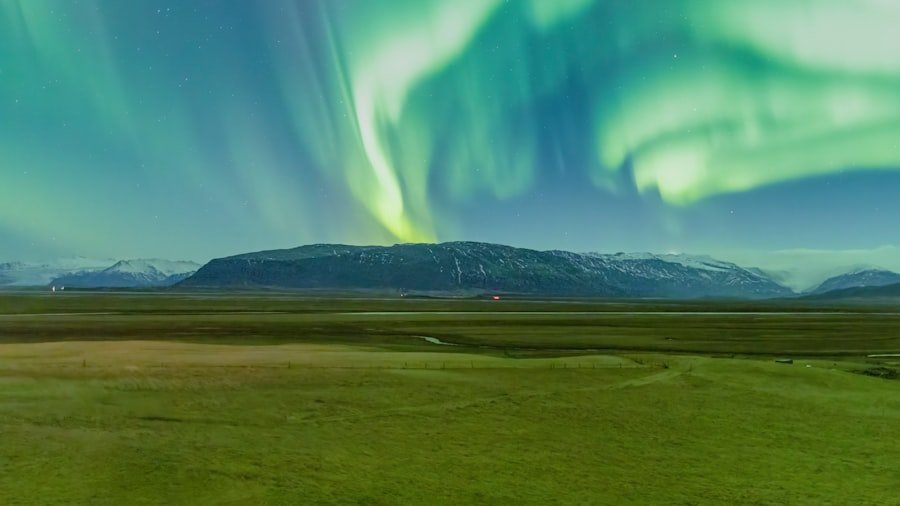
While the time of year provides the foundational framework, I know that other critical factors act as co-authors in the aurora’s appearance. Ignoring these is akin to forgetting a crucial ingredient in a recipe.
Weather Conditions: The Unpredictable Variable
I cannot overstate the importance of clear skies. Even with intense solar activity and optimal darkness, thick cloud cover will act as an impenetrable veil, obscuring any aurora. This is the most frustrating variable for me as an aurora hunter.
Cloud Cover Forecasts: Your Best Friend
Before embarking on an aurora hunt, I always consult cloud cover forecasts. Websites like vedur.is (the Icelandic Meteorological Office) provide detailed cloud-cover maps, allowing me to identify areas with clear patches. This is a vital tool for maximizing your chances. I view checking these forecasts as diligently as checking my compass before navigating unknown terrain.
Microclimates: Localized Clearings
Iceland’s diverse topography creates microclimates. I have often observed that one area can be completely overcast while another, just a short drive away, boasts clear skies. This highlights the importance of flexibility and mobility. Do not be disheartened by a cloudy city sky; a clear patch might be waiting over the next hill or fjord.
Solar Activity: The Aurora’s Fuel
I consider solar activity the engine that drives the aurora. Without it, even the clearest, darkest night will remain aurora-less.
Coronal Mass Ejections (CMEs): The Grand Events
The most spectacular auroras I have witnessed have often been preceded by Coronal Mass Ejections (CMEs). These are massive expulsions of plasma and magnetic field from the sun’s corona. When a CME is directed towards Earth, it significantly enhances the solar wind, leading to stronger geomagnetic storms and, consequently, more vibrant and widespread auroral displays. I think of a CME as a powerful gust of wind energizing the cosmic ballet.
Solar Flares and Geomagnetic Storms: The Indicators
Solar flares, intense bursts of radiation from the sun’s surface, are often associated with CMEs. I pay close attention to solar flare activity and geomagnetic storm predictions. Websites like the National Oceanic and Atmospheric Administration (NOAA) Space Weather Prediction Center (SWPC) provide short-term and long-term forecasts of geomagnetic activity, often expressed as a Kp-index. A higher Kp-index (typically 4 or above) indicates a greater probability of visible aurora and often at lower latitudes.
The Kp-index: Your Predictive Scorecard
I recommend familiarizing yourself with the Kp-index. It’s a scale from 0 to 9, measuring global geomagnetic activity. While a Kp of 2 or 3 might produce faint auroras visible in Iceland, I aim for a Kp of 4 or higher for truly impressive displays. A Kp of 5 or 6, signifying a moderate geomagnetic storm, often results in widespread and bright auroras that dance across the sky.
Optimal Timing Within a Night
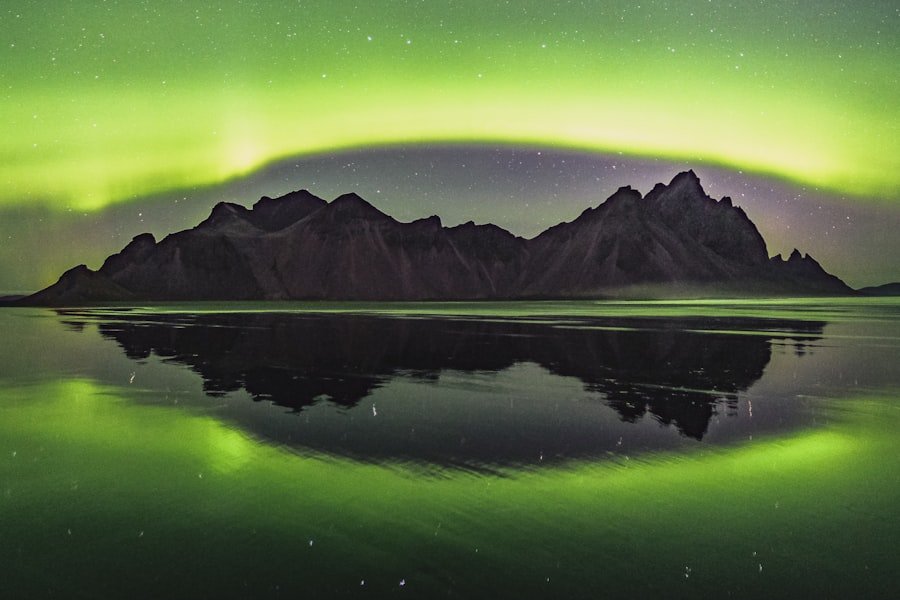
Beyond the season, I know that the specific time within a given night can also influence your chances. The aurora is a nocturnal phenomenon, but not all nocturnal hours are created equal.
Midnight’s Embrace: Your Best Bet
My experience consistently points to the hours around local midnight (between 10 PM and 2 AM) as the prime viewing period. This is when the Earth’s magnetic pole is best oriented to capture the charged particles from the solar wind. I think of it as the aperture of a camera opening widest to capture the most light.
The Hours Before and After: Still Worth Observing
While the midnight hours are often the most active, I don’t discount the hours immediately before and after. I have witnessed beautiful, albeit sometimes fainter, auroras as early as 8 PM and as late as 4 AM. It’s always worth checking the sky if conditions are otherwise favorable.
Avoiding Light Pollution: Your Dark Sanctuary
Just as a dim candle light would be lost amidst a stadium’s floodlights, the aurora’s ethereal glow needs a dark backdrop. I therefore strongly recommend moving away from urban areas and their pervasive light pollution.
Escaping the City Glow: Prioritize Darkness
The light spill from towns and cities can significantly diminish the visibility of the aurora, especially fainter displays. My advice is to drive at least 20-30 minutes outside of Reykjavik or any other populated area. The darker the sky, the more contrast you’ll have, and the more vibrant the aurora will appear. I treat light pollution as a persistent, invisible barrier between me and the celestial spectacle.
Rural Locations: Your Advantage
I actively seek out rural locations with minimal artificial light. The Icelandic countryside is replete with such places. Consider areas along the South Coast, the Snaefellsnes Peninsula, or the Westfjords, where artificial light is scarce. The silence and pristine darkness of these locations also enhance the overall experience, making it more immersive.
If you’re planning a trip to Iceland and hoping to catch a glimpse of the mesmerizing aurora borealis, it’s essential to know the best times to witness this natural wonder. The optimal viewing months are typically from September to April, when the nights are longest and the skies are darkest. For more travel inspiration, you might want to check out this article on a scenic road trip from Montreal to Quebec City, which offers breathtaking views and unique experiences along the way. You can read it here: scenic road trip.
My Practical Advice for Aurora Chasing
| Month | Average Aurora Activity | Night Length (hours) | Weather Conditions | Visibility Rating |
|---|---|---|---|---|
| September | Moderate | 11 | Increasingly clear skies | Good |
| October | High | 14 | Cool, often clear | Very Good |
| November | High | 17 | Cold, variable clouds | Good |
| December | Very High | 20 | Cold, often cloudy | Fair |
| January | Very High | 19 | Cold, often cloudy | Fair |
| February | High | 16 | Cold, clearer skies | Good |
| March | High | 13 | Cool, clearer skies | Very Good |
My journey as an aurora enthusiast has taught me several practical lessons that I’d like to share to enhance your chances and experience.
Be Patient and Persistent: The Gardener’s Virtue
The aurora is a natural phenomenon; it follows its own schedule, not yours. I approach aurora hunting with the patience of a gardener tending to a delicate bloom. There will be cloudy nights, and there will be nights with low solar activity. Do not be discouraged. Persistence is key. Dedicate multiple nights if possible, and be prepared to wait.
Dress Warmly: Embrace the Cold
Icelandic nights, particularly in winter, can be brutally cold. I dress in multiple layers, including thermal underwear, a warm mid-layer, a windproof and waterproof outer layer, a hat, gloves, and insulated boots. Frostbite is a real risk, and being uncomfortably cold will detract from your experience, regardless of the aurora’s brilliance. Think of yourself as an explorer of the arctic, properly outfitted for the conditions.
Check Multiple Forecasts: A Broader Perspective
I don’t just rely on one forecast. I cross-reference cloud cover forecasts (like vedur.is), aurora probability forecasts (like aurora-service.eu or the My Aurora Forecast app), and general weather forecasts. This provides me with a more comprehensive overview and helps me make informed decisions about where and when to go.
Consider a Guided Tour: Expert Assistance
If you’re new to aurora hunting or prefer a structured approach, I often recommend a guided tour. Local guides possess invaluable knowledge of the best viewing spots, understand microclimates, and often have access to real-time updates on conditions. They can also navigate challenging terrain and provide essential equipment like hot chocolate, a welcome warmth in the frigid nights.
Allow for Flexibility: The Aurora’s Whim
My best advice is to remain flexible. If the forecast for tonight is poor, rearrange your plans for tomorrow. Be prepared to travel to different parts of the country if a clear patch of sky is hours away. The aurora is a fickle mistress, and adapting to her whims is crucial for success. I treat it like a strategic game, always adjusting my tactics based on the unfolding conditions.
In conclusion, seeing the Aurora Borealis in Iceland is an unforgettable experience, a celestial tapestry woven with light and solar energy. While I cannot guarantee a sighting, understanding the optimal season (September to April, especially the winter months), prioritizing astronomical darkness, monitoring critical factors like solar activity and weather, and adhering to practical advice will significantly enhance your probability of witnessing this natural wonder. My hope is that this guide empowers you to embark on your aurora chase with confidence and a deeper appreciation for the cosmic forces at play.
FAQs
When is the best time of year to see the aurora in Iceland?
The best time to see the aurora borealis in Iceland is from late September to mid-April, with peak viewing opportunities typically between November and February when the nights are longest and darkest.
What time of night is best for aurora viewing in Iceland?
Auroras are most commonly visible between 9 PM and 2 AM local time, with the highest chances often around midnight when the sky is darkest.
What weather conditions are ideal for seeing the aurora in Iceland?
Clear, dark skies with minimal cloud cover are essential for good aurora viewing. Avoid nights with heavy cloud cover or bright moonlight, as these can obscure the northern lights.
Can the aurora be seen from Reykjavik or do I need to travel outside the city?
While it is possible to see the aurora from Reykjavik, light pollution can reduce visibility. For the best experience, it is recommended to travel to rural areas or designated dark spots away from city lights.
Are there any tools or apps that can help predict aurora activity in Iceland?
Yes, there are several apps and websites that provide real-time aurora forecasts and KP index predictions, such as the Icelandic Meteorological Office website, Aurora Forecast apps, and space weather monitoring services. These tools help plan the best nights for aurora viewing.